Google Chrome Celebrates 15 Years of Browsing Innovation
On September, 2 of each year, Google celebrates the birthday of the most popular browser "Google Chrome".


Google Chrome shipped its first public beta on 2 September 2008, for Windows only. I wrote this post for its fifteenth birthday in 2023. Three years later Chrome is 18, runs on about two thirds of the web's traffic, and I have since had my own patch merged into Chromium. So this is a refreshed look at where the browser came from, where it stands in 2026, and what the birthday features of 2023 turned into.
History
Google did not want a browser at first. CEO Eric Schmidt opposed the idea for six years. He said Google was "a small company" at the time and he did not want to go through "bruising browser wars". Rumours of a Google browser first appeared in September 2004, shortly after Firefox 1.0 started taking share from Internet Explorer, and Google began hiring former Microsoft web developers around the same time.
Development started in 2006, led by Sundar Pichai. The founders built a prototype so convincing that Schmidt later admitted it changed his mind. Chrome was announced with a 38 page comic by Scott McCloud, published a day early by accident, which explained the three ideas that made it different:
- One process per tab. A crashed page took down one tab, not the whole browser, and each tab was sandboxed.
- V8. A JavaScript engine built from scratch in Denmark that compiled JavaScript to machine code. It made web apps fast enough to compete with desktop software, and later became the engine inside Node.js.
- The omnibox. One field for both URLs and searches, which every browser copied.
The code was released the same day as the open source Chromium project. Mac and Linux builds reached stable in May 2010 with Chrome 5. Chrome for Android arrived in February 2012, the iOS version in June 2012, and in April 2013 Google forked WebKit's rendering engine into Blink, which Chrome, Edge, Opera, Brave and Samsung Internet all use today.
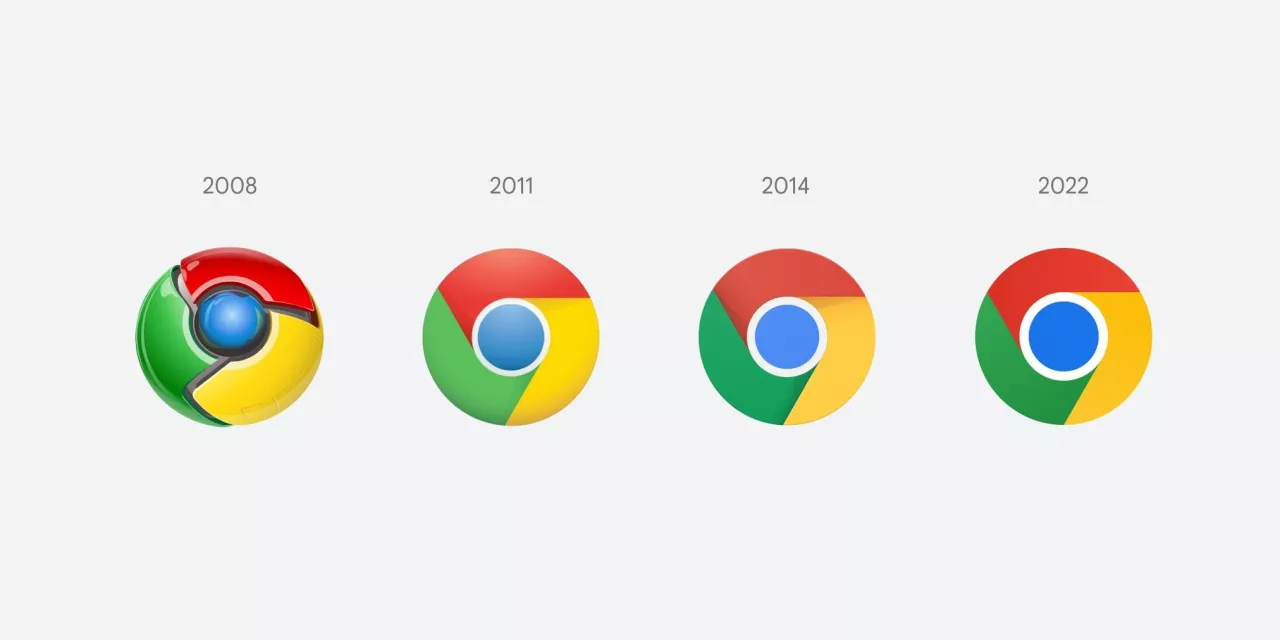
Usage and market share
Chrome passed Firefox in November 2011. On Sunday 18 March 2012, StatCounter measured it as the most used browser in the world for a single day, with 32.7% of page views against 32.5% for Internet Explorer. It held the top spot for a full week in May 2012 and has not given it back since.
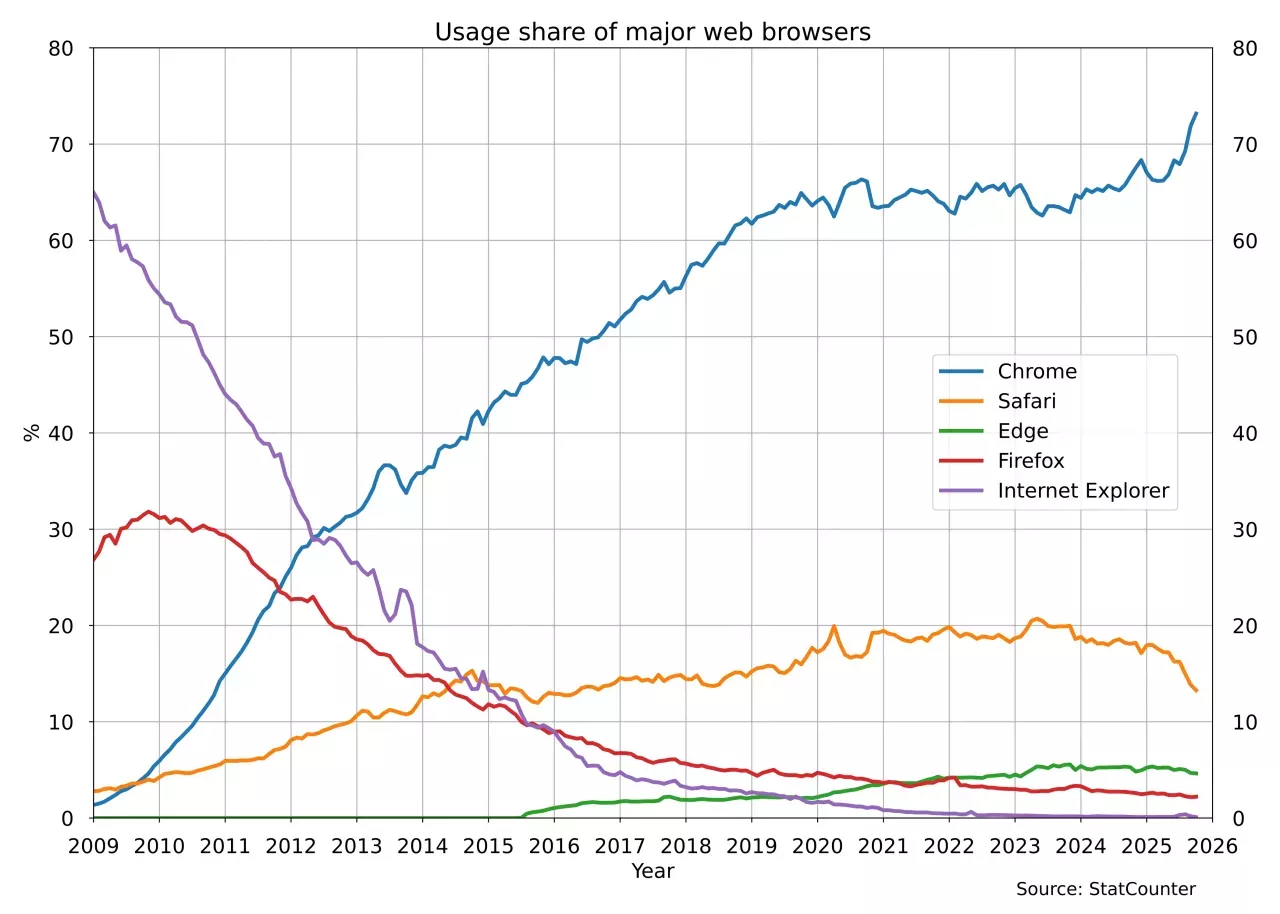
As of September 2026, StatCounter puts Chrome at 66.5% of worldwide usage across all devices. Safari is second with 18.2%, almost entirely from iPhones, then Edge at 6%, Firefox at 2.8% and Samsung Internet at 2.3%. On desktop alone Chrome has 65.1%, Edge 14.6%, Safari 8.1% and Firefox 6.1%. Counting Blink based browsers together, around three quarters of all page views are rendered by the same engine, which is why web standards work increasingly happens in the open through Chromium.
What the 15th birthday shipped
In September 2023 Google marked the anniversary with the biggest visual refresh of Chrome in years. Here is what was announced then and what it looks like three years on:
- Material You design. The toolbar, menus and new tab page were redrawn with Google's Material You language, with colour themes that follow the system and a Customize Chrome side panel. This is the Chrome you see today.
- A redesigned Chrome Web Store. New categories, editor collections and a Material You look. It also became the home of the Manifest V3 transition: Chrome stopped loading Manifest V2 extensions in 2025, which changed how ad blockers and privacy extensions work.
- Search in the side panel. Google results next to the page you are reading. This evolved into the Gemini integration that reached Chrome in 2025, first in the US, letting you ask questions about the current page and across tabs.
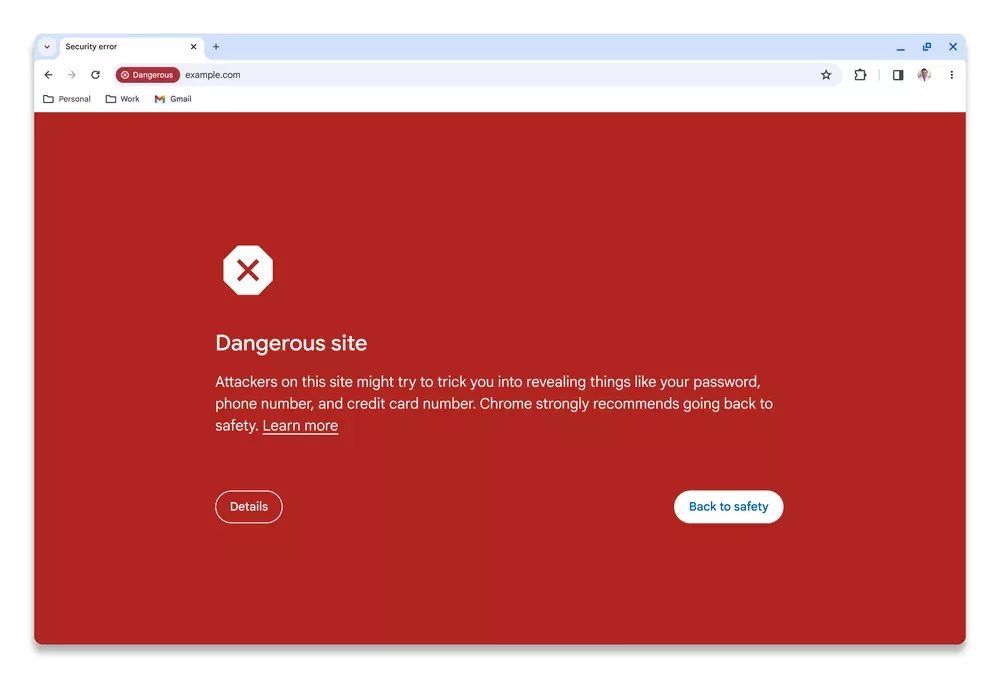
Stronger Safe Browsing. The standard protection mode moved to real time checks against Google's list of known bad sites instead of a list refreshed every 30 to 60 minutes. Google said at launch this blocked around 25% more phishing attempts.
Chrome at 18
A few things changed between the 2023 post and this update that matter for developers:
- Release cadence. Chrome ships a new stable version every four weeks. The current stable is Chrome 155, with an extended stable channel for organisations that want eight weeks.
- Third party cookies stayed. After four years of Privacy Sandbox work, Google announced in 2024 that it would not remove third party cookies, and in 2025 dropped the plan for a standalone choice prompt. Incognito still blocks them.
- Baseline. Chrome, Firefox, Safari and Edge now publish a shared signal for when a web feature is safe to use everywhere. I covered it in my DevFest Sousse 2024 talk.
- AI in the browser and in DevTools. Beyond Gemini in the UI, Chrome exposes on device models through the Prompt API family, and DevTools gained an MCP server so coding agents can drive a real browser. I demoed it at DevFest Sousse 2025.
- Chromium is approachable. It is a huge codebase, but a focused fix with a test and a reviewer is a realistic weekend project. Mine was a CSSOM gap in how
CSSImportRule.mediawas exposed, six lines in Blink and six in DevTools.
Conclusion
Chrome started as a bet Google's own CEO did not want to make. It won on speed, stability and an open source core, and 18 years later most of the web runs on its engine. The useful lesson for engineers is not the market share but the architecture decisions from 2008, process isolation, a compiler for JavaScript and open development, which are still the reasons it is ahead. If you build for the web, follow the Chrome release notes every four weeks and check Baseline before you ship a new feature.
Frequently asked questions
When was Google Chrome created?
Google announced and released the first beta of Chrome on 2 September 2008, for Windows only. Mac and Linux versions followed in 2010.
How old is Google Chrome?
Chrome was released on 2 September 2008, so it turned 18 in September 2026.
Who opposed the creation of Google Chrome?
Google CEO Eric Schmidt opposed building an independent browser for six years, concerned about the cost of entering the browser market, before eventually agreeing.
Why was Google Chrome created?
Chrome was built to deliver a faster, more stable and more secure browsing experience, using a multi process architecture and the fast V8 JavaScript engine.